
The Short Answer
Georgia red clay swells with moisture and shrinks as it dries, and that cycle lifts and drops anything resting in the active surface layer. A deck footing has to reach below that active layer onto firm soil and be wide enough to spread the post load, so the post stays put through wet and dry seasons. A shallow or undersized footing in clay is the setup for a leaning, racking deck.
Why Red Clay Moves
Red Piedmont clay is an expansive soil, which means its volume changes with its water content. The 53.26 inches of rain a year soaks the ground and the clay swells, then dry spells pull the water back out and it shrinks. That repeated swell-and-shrink in the top layer of soil is what heaves footings. Sandy soils drain and stay stable; clay holds water and moves, which is why a footing detail that works elsewhere can fail here.
How Footing Depth and Diameter Are Set
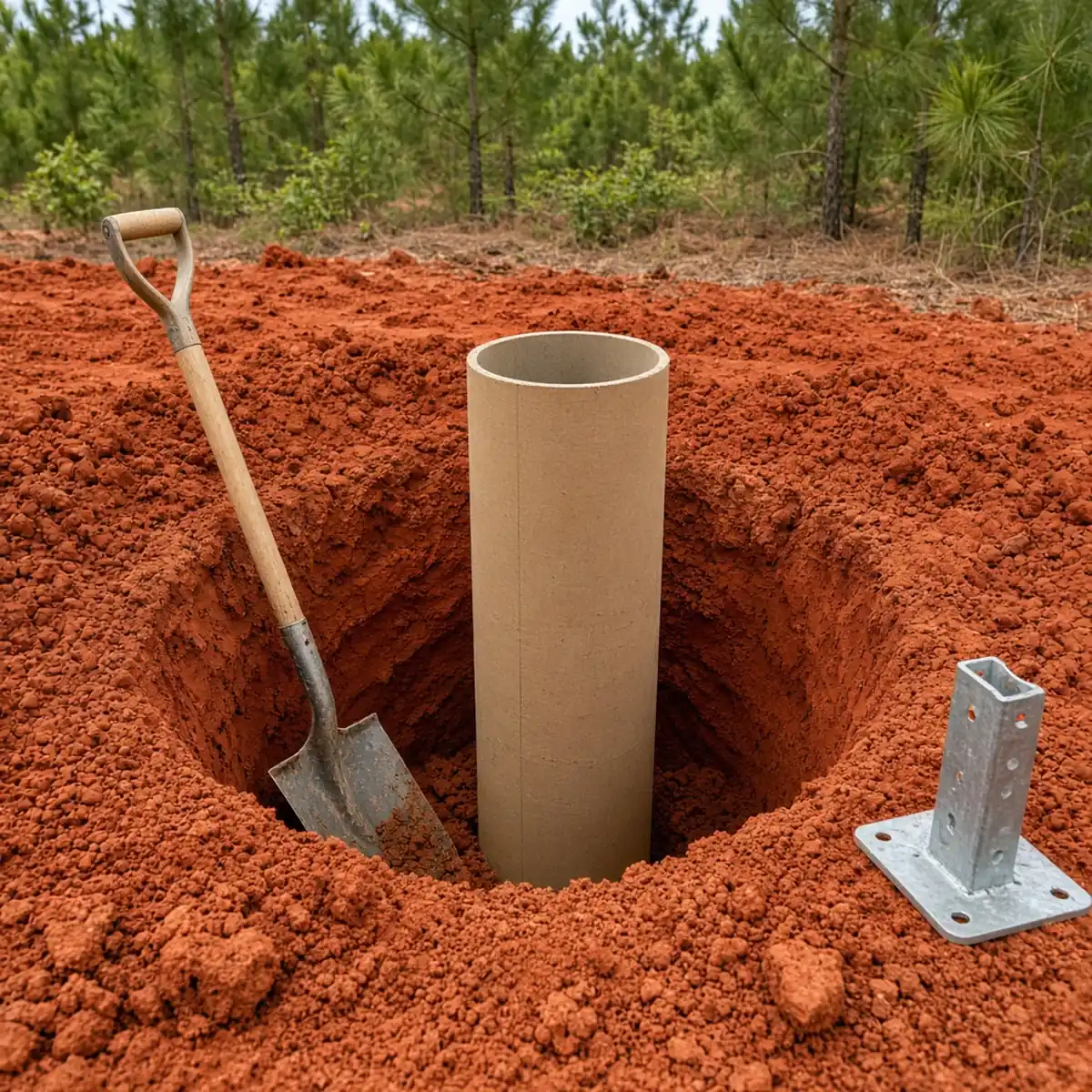
Footing size is set by two things: reaching stable soil and spreading the load. The depth has to get below the active, moisture-changing layer onto firm soil that does not move with the seasons, which also satisfies the code's frost-depth rule. The diameter has to be wide enough that the post load spreads over enough soil to not sink. Taller posts and heavier decks need larger footings. On a slope, the footing also resists the downhill creep of saturated clay, so hillside footings go deeper and wider.
What a Bad Footing Looks Like Later
A bad footing shows itself over a few seasons:
- Posts that lean or are no longer plumb
- A deck that racks or feels unstable side to side
- Gaps opening at the ledger as the deck drops away from the house
- Stairs pulling away from the deck or the landing
- A deck surface that is no longer level
These are the signs of footings riding the clay instead of resting below it, and they commonly mean the footings have to be redone.
What a Homeowner Can Check
A homeowner cannot see a footing, but the posts tell the story. A post that is out of plumb, a base that has shifted off its pier, or a deck corner that has dropped all point to footing movement. Water pooling at the base of posts speeds the clay cycle and should be drained away. When any of these show up, an inspection of the footings and the frame tells whether a repair or a rebuild is needed. Catching it early keeps a footing problem from becoming a structural one.