
The Short Answer
Soft boards, a wobbly railing, or popped fasteners commonly mean repair. A ledger pulling away from the house, leaning posts, or widespread frame rot commonly mean replacement or a major rebuild. The structure decides: surface and connection problems are repairable, while footing and framing failure is not worth patching. A safety inspection settles which side a deck is on.
Signs That Point to Repair
These signs commonly mean a targeted repair, not a new deck:
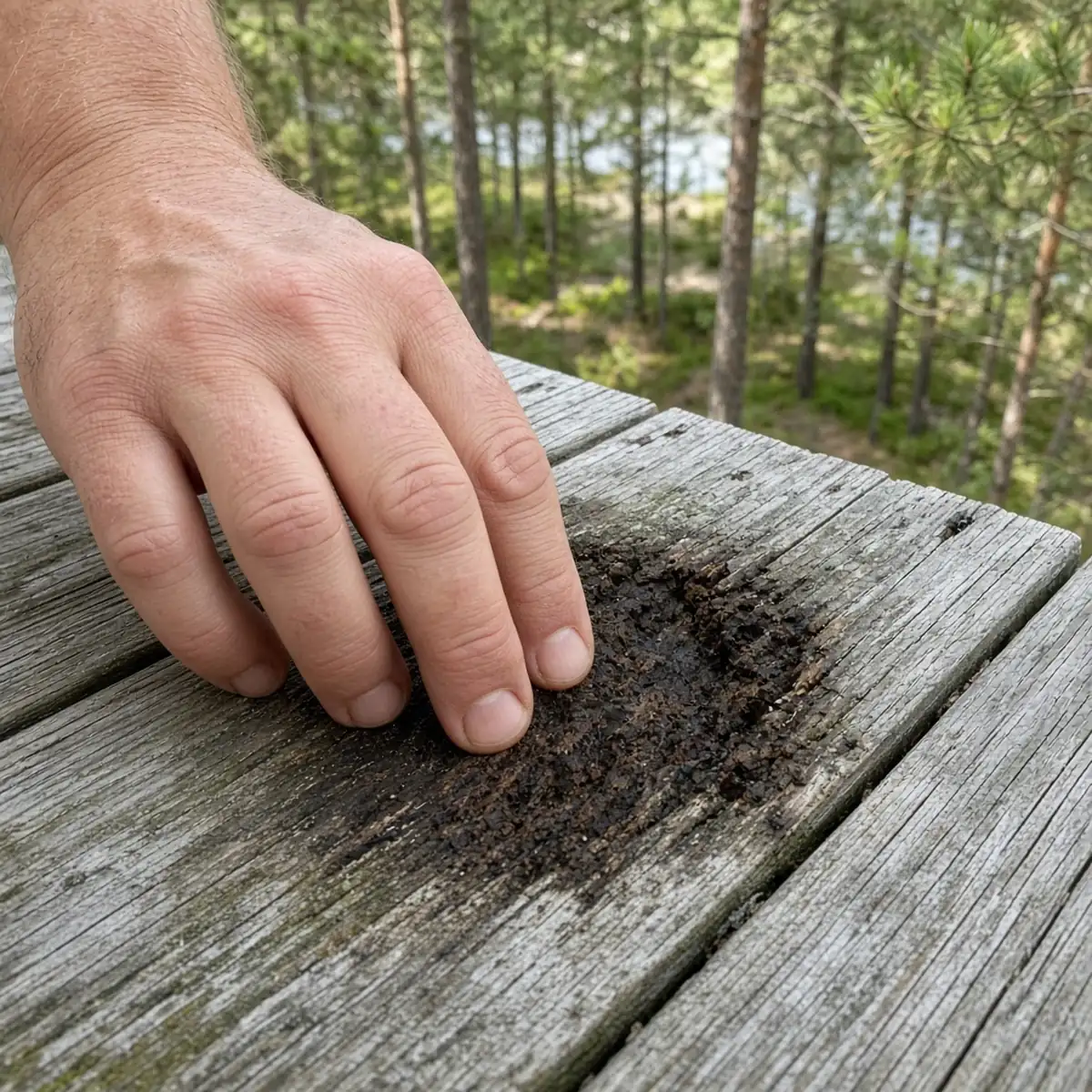
- A few soft, split, or cupped boards over a sound frame
- A railing that wobbles because the posts are under-anchored
- Popped nails or screws backing out of the boards
- Surface mildew, graying, or a failed stain on wood
- A single rotted joist or stair stringer
Caught early, these are fixed without touching the rest of the deck.
Signs That Point to Replacement
These signs commonly mean the deck is past repair:
- The ledger is separating from the house or the rim joist is rotted
- Posts lean or have shifted at the base from clay movement
- Rot runs through multiple joists and beams
- The deck sits below the current guard and load code and cannot be brought up cheaply
- Footings have heaved or sunk
When the structure has failed, a new deck is safer and frequently cheaper than chasing the rot.
Why the Ledger Is the First Thing to Check
The ledger, where the deck attaches to the house, is the first thing to check on any Woodstock deck because it is the most common failure point and the most dangerous. Woodstock's 53.26 inches of rain a year gets behind an unflashed ledger and rots the rim joist and the board itself, which is how decks pull away from houses. A ledger that is separating, stained dark, or soft is a stop-using-it sign until a pro looks at it.
What Causes Woodstock Decks to Age Out
Woodstock decks age out from a mix of climate and clay. The humidity and rain rot untreated wood and corrode first-generation fasteners, and the red Piedmont clay swells and shifts shallow footings over the years. Decks from the 2000s building boom are now old enough that the original hardware and flashing have reached the end of their life. The age of the stock is why repair and replacement demand is rising across the area.