
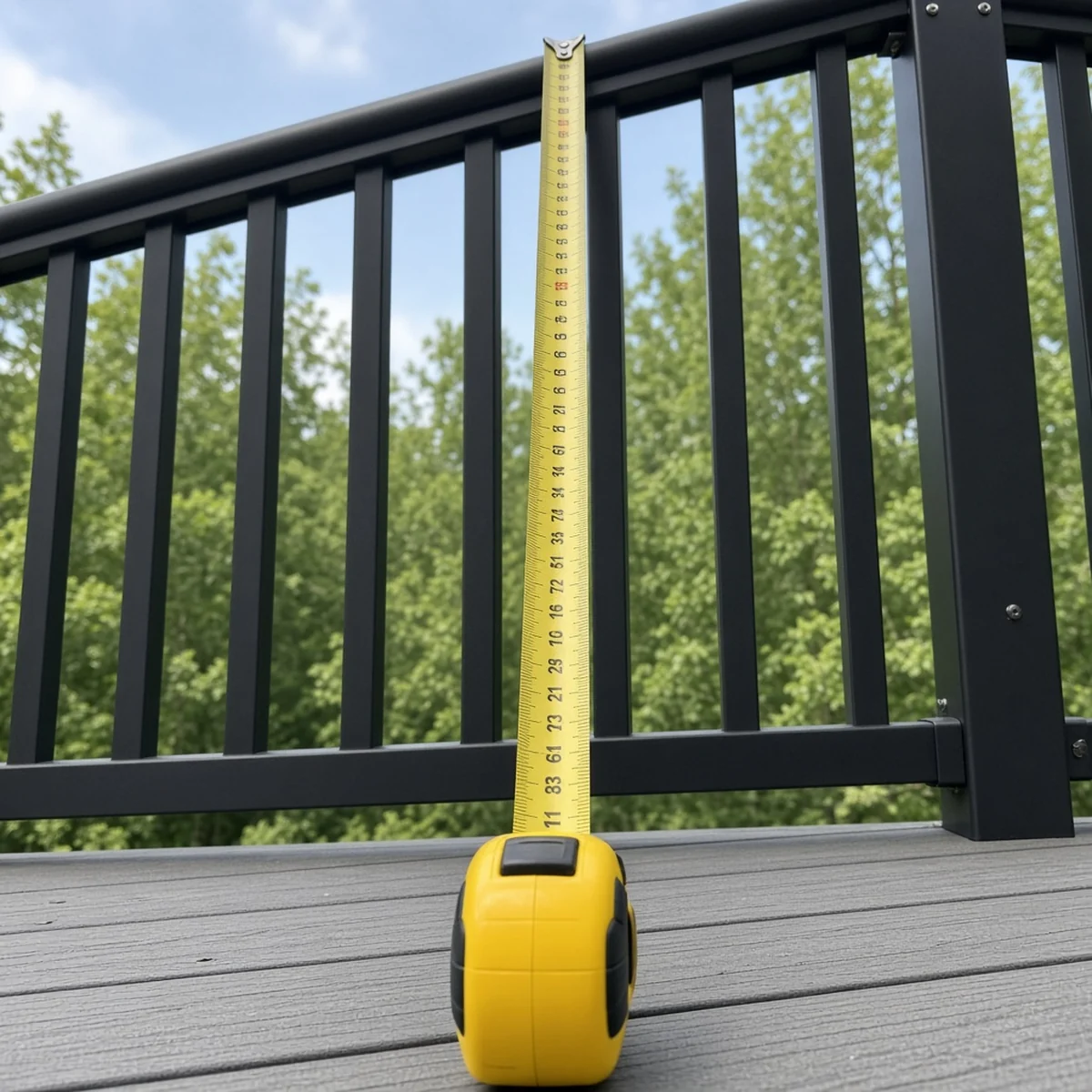
The Short Answer
Under Georgia's IRC-based residential code, a deck more than 30 inches above grade needs a guard at least 36 inches high, with infill that blocks a 4-inch sphere. Stair handrails run 34 to 38 inches. Footings must reach below the frost line into firm soil, and the ledger connection must be bolted and flashed, not nailed. A permit and inspections apply to most new decks.
Guard and Railing Rules
The guard rules are the ones inspectors check first:
- A guard is required on any deck surface more than 30 inches above grade
- The guard must be at least 36 inches high, measured from the deck surface to the top
- Infill must not allow a 4-inch sphere to pass through
- The gap under the bottom rail must stay under 4 inches
- A graspable handrail is required on stairs of four or more risers, set 34 to 38 inches high
A guard below 36 inches or with wide balusters fails inspection, and both are common defects on older Woodstock decks.
Footing and Ledger Rules
Footings and the ledger are where the structure lives or dies. Footings must bear below the frost line on undisturbed or compacted soil, which in north Georgia is a modest depth but still matters on the red clay that shifts when saturated. The ledger that attaches the deck to the house must be fastened with the bolts and spacing the code specifies and flashed so water sheds away, because a nailed or unflashed ledger is the leading cause of deck collapses. Georgia's code includes the tested ledger-connection requirements for this reason.
Load Requirements
The code sets minimum loads a deck must carry. A residential deck is designed for a live load of 40 pounds per square foot plus the dead load of the structure itself, and the guards and their post connections must resist a specified lateral load so a railing holds when someone leans on it. The joist and beam spans are sized to span tables so the deck does not sag or bounce. These loads are why post anchoring and joist sizing are not places to cut corners.
Where Local Amendments Come In
The state code is the baseline, and local jurisdictions can adopt amendments on top of it. The City of Woodstock and Cherokee County enforce the Georgia residential code and run the permit and inspection process, and either can carry local requirements that go beyond the base code. Because of that, the covering building department confirms the exact requirements and any local amendments before a deck is designed. A builder checks this as part of pulling the permit.