
The Short Answer
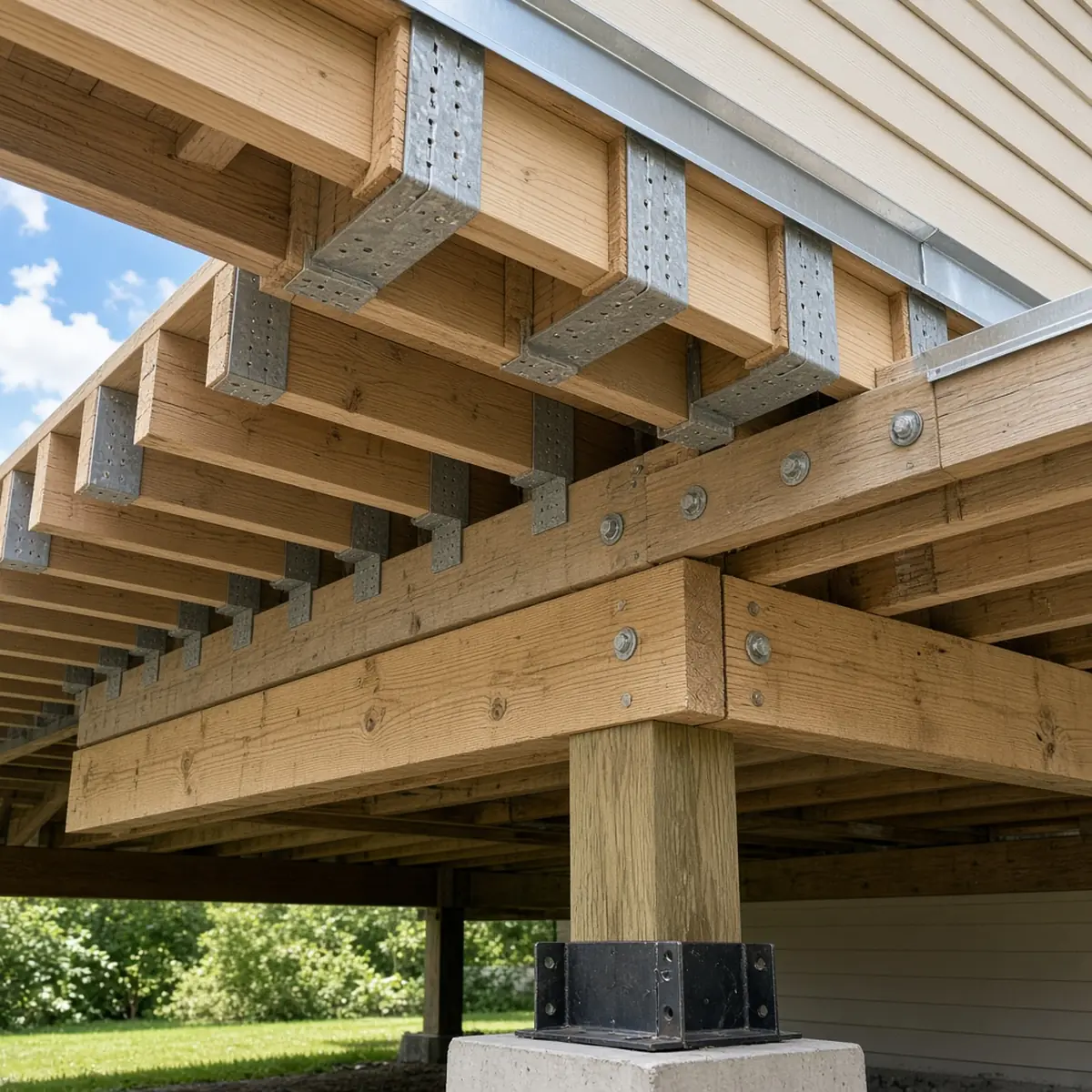
A deck breaks down into the frame that carries the load (ledger, beams, joists, posts, footings), the surface people use (decking, fascia, stairs), and the safety system (guard, baluster, handrail). The ledger and footings are where most Woodstock deck failures start. The rest of this guide defines each term in plain language.
Structure and Frame Terms
Ledger. The board that attaches the deck to the house and carries the inside edge of the deck. It must be bolted and flashed, not nailed, because an unflashed ledger is the leading cause of deck failures in a wet climate like Woodstock's.
Footing. The concrete base below each post that transfers the deck load to the soil. In Georgia red clay, a footing has to reach below the active layer that swells and shrinks, or the post heaves.
Post. The vertical support that carries the beam down to the footing. Taller posts on sloped Woodstock lots need larger footings and bracing.
Beam. The horizontal member that spans between posts and carries the joists.
Joist. The repeating horizontal members that support the deck boards. Composite decking needs tighter joist spacing than wood.
Flashing. The metal or membrane that keeps water from getting behind the ledger into the house wall.
Surface and Finish Terms
Decking. The boards that form the walking surface, in pressure-treated wood, cedar, hardwood, or capped composite.
Capped composite. A wood-plastic board wrapped in a polymer shell that resists the rot, mildew, and fade Georgia humidity drives into wood.
Fascia. The trim board that covers the exposed frame edge and rim joist for a finished look.
Sleeper. A pressure-treated member laid across a concrete patio to carry deck boards above the slab with a drainage gap.
Stringer. The notched board that supports the stair treads.
Safety and Code Terms
Guard. The railing system required on any deck more than 30 inches above grade in Georgia, built at least 36 inches high.
Baluster. The vertical infill of a guard, spaced so a 4-inch sphere cannot pass through.
Handrail. The graspable rail on a stair, set 34 to 38 inches high, required on stairs of four or more risers.
Live load. The weight a deck must carry from people and furniture, set at 40 pounds per square foot for a residential deck.